


Lulu Garcia-Navarro
Lulu Garcia-Navarro is the host of Weekend Edition Sunday and one of the hosts of NPR's morning news podcast Up First. She is infamous in the IT department of NPR for losing laptops to bullets, hurricanes, and bomb blasts.
Before joining the Sunday morning team, she served as an NPR correspondent based in Brazil, Israel, Mexico, and Iraq. She was one of the first reporters to enter Libya after the 2011 Arab Spring uprising began and spent months painting a deep and vivid portrait of a country at war. Often at great personal risk, Garcia-Navarro captured history in the making with stunning insight, courage, and humanity.
For her work covering the Arab Spring, Garcia-Navarro was awarded a 2011 George Foster Peabody Award, a Lowell Thomas Award from the Overseas Press Club, an Edward R. Murrow Award from the Corporation for Public Broadcasting, and the Alliance for Women and the Media's Gracie Award for Outstanding Individual Achievement. She contributed to NPR News reporting on Iraq, which was recognized with a 2005 Peabody Award and a 2007 Alfred I. duPont-Columbia University Silver Baton. She has also won awards for her work on migration in Mexico and the Amazon in Brazil.
Since joining Weekend Edition Sunday, Garcia-Navarro and her team have also received a Gracie for their coverage of the #MeToo movement. She's hard at work making sure Weekend Edition brings in the voices of those who will surprise, delight, and move you, wherever they might be found.
Garcia-Navarro got her start in journalism as a freelancer with the BBC World Service and Voice of America. She later became a producer for Associated Press Television News before transitioning to AP Radio. While there, Garcia-Navarro covered post-Sept. 11 events in Afghanistan and developments in Jerusalem. She was posted for the AP to Iraq before the U.S.-led invasion, where she stayed covering the conflict.
Garcia-Navarro holds a Bachelor of Science degree in international relations from Georgetown University and an Master of Arts degree in journalism from City University in London.
-
 Seventeen missionaries were kidnapped by an armed gang in Haiti on Saturday. It was the latest in what experts are calling a kidnapping crisis in the country — a crisis largely driven by one gang.
 -
 When Shaandiin Parrish was crowned Miss Navajo Nation in 2019, she didn't expect to win. She also didn't expect to be carrying the honor two years later and through the health crisis.
 -
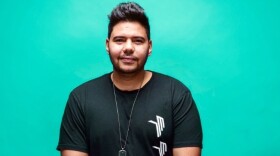 Every year, the Tiny Desk Contest attracts thousands of unsigned musicians from across the country. Yosmel Montejo impressed the judges with "La Caliente," a song that reflects on life in Cuba.
 -
NPR's Lulu Garcia-Navarro talks with Kathleen Belew, co-editor of "A Field Guide to White Supremacy" about Great Replacement Theory, also known as White Replacement Theory.
-
Lulu Garcia-Navarro talks to Jennifer Aniston and Mimi Leder about the new season of "The Morning Show."
-
 With lyrics poking at the ways young women are scrutinized and exploited, Happier than Ever finds Eilish in some dark corners — but the pop supernova tells NPR she's got lots to feel hopeful about.
 -
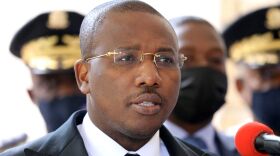 Claude Joseph is one of three men with claims to power in Haiti. He says he's been in talks with the others about resolving the dispute amid the investigation into the president's assassination.
 -
NPR's Lulu Garcia-Navarro speaks with Claude Joseph, the interim prime minister of Haiti, who was about to be replaced the day of the assassination of President Jovenel Moïse.
-
Haiti's troubles go back more than a century. Lulu Garcia-Navarro talks with Brooklyn College professor Jean-Eddy Saint Paul about the country's history.
-
New information about the 2020 election reveals a growing shift among Latino voters away from the Democratic party. Lulu Garcia-Navarro talks with OpenLabs R&D researcher David Shor about it.


