

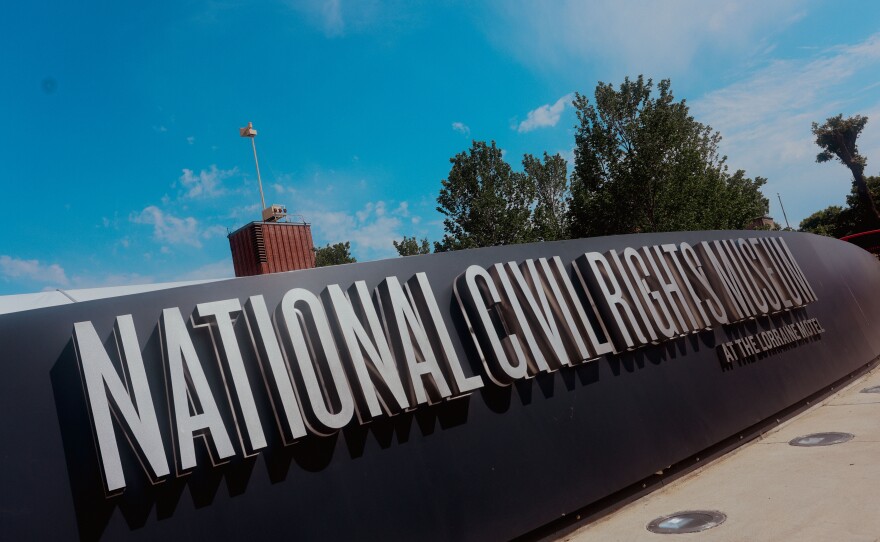
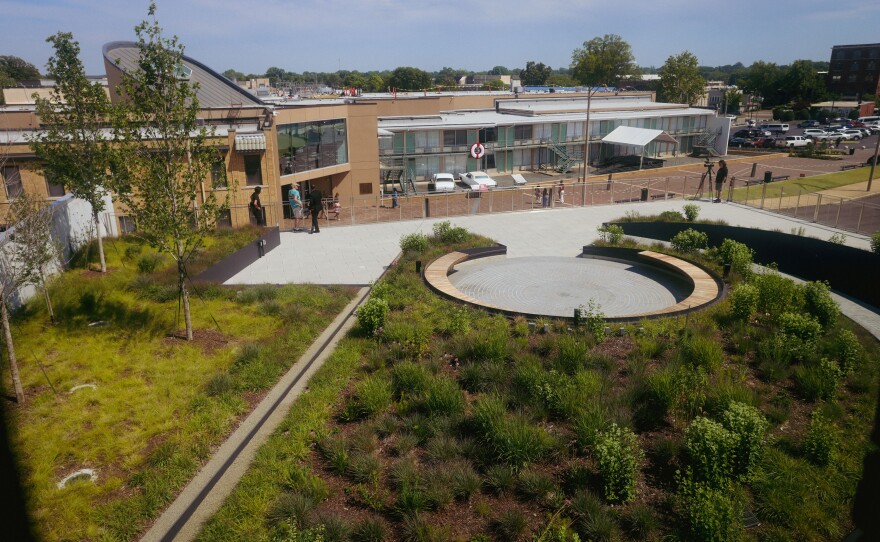

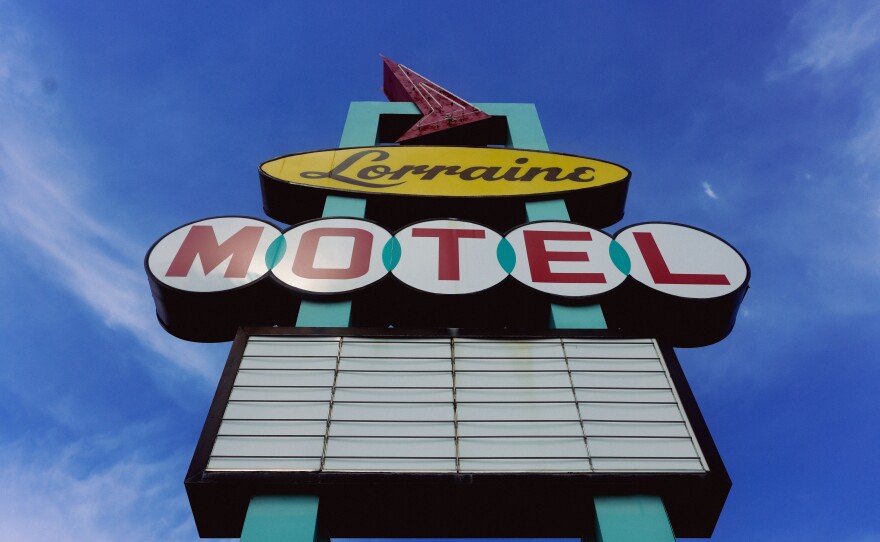
Thirty-Five years after the former Lorraine Motel in Memphis opened to the public as the National Civil Rights Museum, a major $55 million renovation called the Legacy Experience brings renewed emphasis to the Freedom Movement since the death of Dr. Martin Luther King Jr.
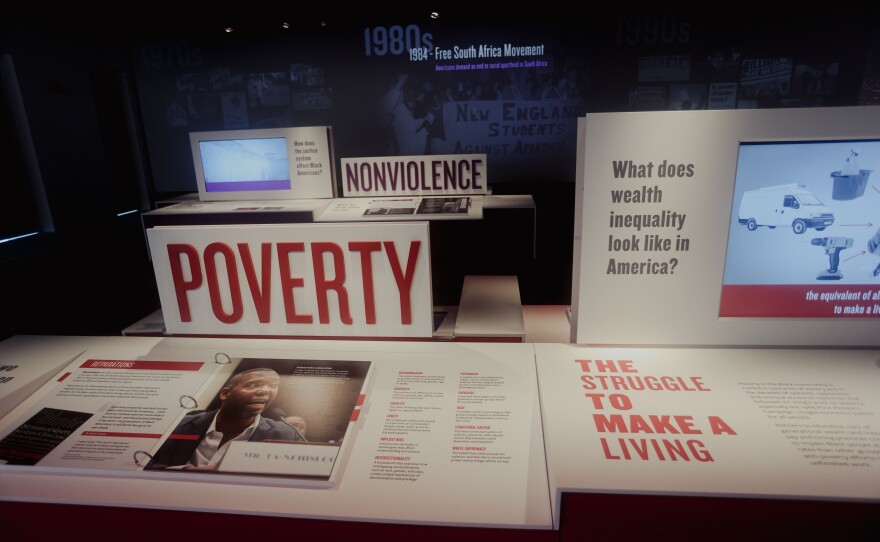
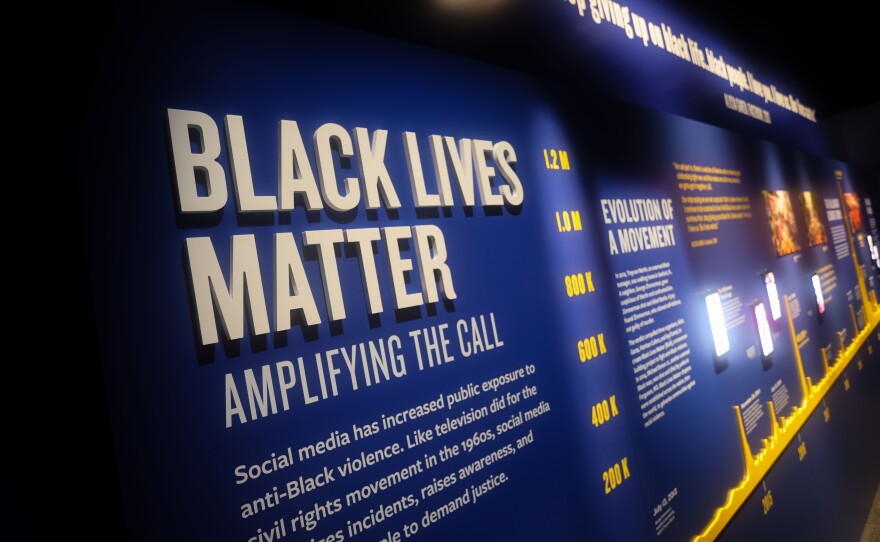
New gallery spaces give voice to the Poor People's Campaign, contemporary movements like "Me Too" and criminal justice reform.
But last Saturday's dedication also comes in the wake of a Supreme Court decision that significantly scaled back provisions of the 1965 Voting Rights Act. In the wake of Tennessee's recent congressional redistricting, the museum has been a backdrop for protests and press conferences.
Museum President Dr. Russ Wigginton talked with WKNO about its role in both preserving history while also making it.
CHRISTOPHER BLANK (Host): These are renovations to the area across from the old Lorraine Motel. It includes the former rooming house where James Earl Ray shot Dr. King. What was the goal of this project?
DR. RUSSELL WIGGINTON: Number one, we recognized that when people would leave room 306 in the Lorraine Motel (Dr. King's hotel room), they were moved in some way. And we wanted to make sure that people had physical space in which to process, to contemplate, to be in communities. People also asked us what happened after Dr. King died. And part of that answer was to make sure that we reminded people, and shared for the first time for others, that the movement continued after 1968. The movement continues now. And so it gave us this almost 60-year window to learn from the multiple trials and tribulations of the last 60 years.
BLANK: One display case has some items that belong to Tyre Nichols. And it struck me because it's still such a raw wound here in Memphis. The case is still in the courts. In terms of curation, where does the conversation start about what gets represented?
WIGGINTON: We thought about topics that were grounded from Dr. King's last book, "Where Do We Go from Here: Chaos or Community." And we thought about powerful stories that happened, or are happening now, over the last almost 60 years. And we wanted to highlight the idea of everyday people who do extraordinary things. That was the heart of the traditional movement and we think it's still the heart of the movement today.
BLANK: The Civil Rights Museum is often a backdrop for local protests and press conferences. Obviously, no one owns the symbolism of that famous balcony, but it is used by many. How do you view the museum's role in ongoing civic discourse?
WIGGINTON: How we think about the museum is that number one, it is a international site of consciousness. And we think about ourselves as being a conscience leader, if you will, in this country. And we always remind people that how we operate and how we come across in community is grounded in what Dr. King talked about in the Beloved Community. And we think that that's part of our contribution to society.
BLANK: I think that maybe like a Holocaust museum, your mission is to help keep history from repeating itself. And as you were dedicating this new space last weekend, Republicans throughout the South are carving up Black majority congressional districts. How do you navigate the politics of being a living history institution?
WIGGINTON: I don't struggle with our ability to be truth-tellers, to be grounded in facts and data, and to be a place that is committed unconditionally to making sure that African American history is fully incorporated into the overall American history story. And we just speak very matter-of-factly. You don't see a lot of side commentary from us. We say what it is. We say it loud, we say it clear, and we let it speak for itself. I believe that has served us well for 35 years and I think it will serve us well for the next 35.
BLANK: I've been to the museum many times before. Why would you recommend coming back to the museum, and why would it be relevant to somebody right now?
WIGGINTON: Whatever people might have experienced in the boarding house before, this is a total transformation. The other thing is the number of stories, the depth of those stories is significant. And depending on where one is in their own life or what's happening in the world, different things hit you in different ways. Every time you come, you can focus in different ways, take in different topics and issues. Underneath all of it is: we want people to have an intellectual and a heartfelt experience. And when you're doing that, you can do it over and over and over.
