



This weekend in Overton Park, a local landmark will be swarming with visitors.
Krissy Flickinger plans to be among them.
"I love old buildings," says the architect with Looney Ricks Kiss, or LRK. "I try to work on every old building I can and help bring it back to life if needed."
LRK has done just that for many historic properties around town. Crosstown Concourse, the Tennessee Brewery, Central Station Hotel, and now the former Memphis College of Art.
On Saturday, it reopens as the new home of the Metal Museum. For Flickinger, this project was about honoring two institutions.
"We don't want to lose the story that the building has already told," she says. "We just want to add on to that. So with this building... let's see."
Where to start?

April, 1959.
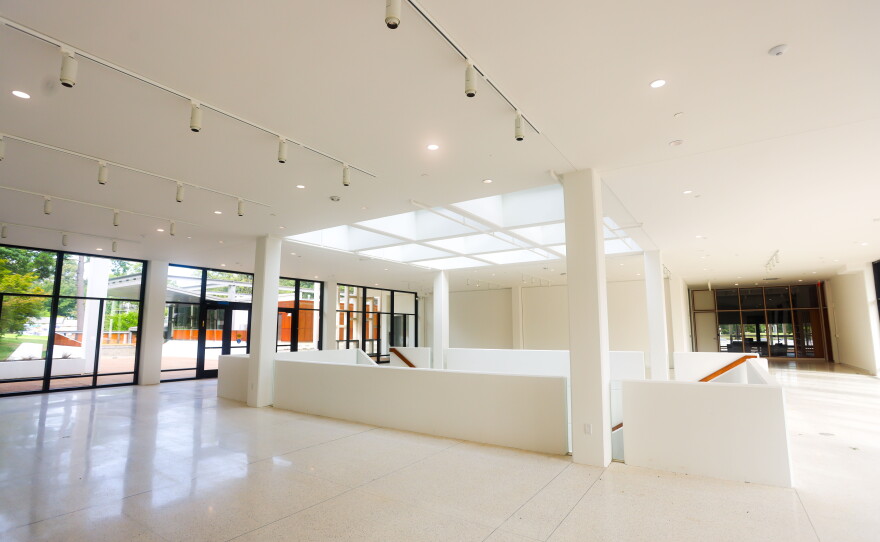
The Memphis Academy of Arts has just traded a Victorian mansion near Downtown for a brand new campus, a building as modern as its goals.
"It's a really good example, not just locally, but nationally, of what's called the New Formalist style," says Greg Morrison, an LRK architect specializing in historic preservation.
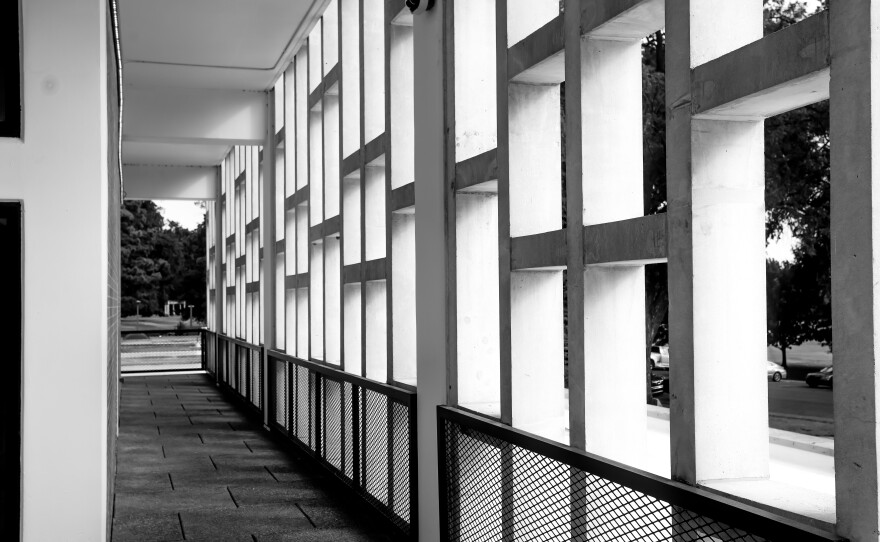
He says the college held a national competition for the design. The winners, a pair of young Memphis architects named Roy Harrover and Bill Mann, would go on to other big local projects like the Memphis Airport. But this, their first claim to fame, was notable for the concrete lattice surrounding the interior building.
"It's called a brise-soleil," Morrison says. "It's a sun screen, basically."
Like a mini-Acropolis set on a hill, the design was even praised as a "classical concept" by one judge.
Edwin Rust, the academy's director, for whom the building would later be named Rust Hall, invited the public for a tour on a Sunday afternoon. The school hailed its achievement as a "living and enduring monument."
And it was... until 2020, when the Memphis College of Art closed its doors due to declining enrollment.
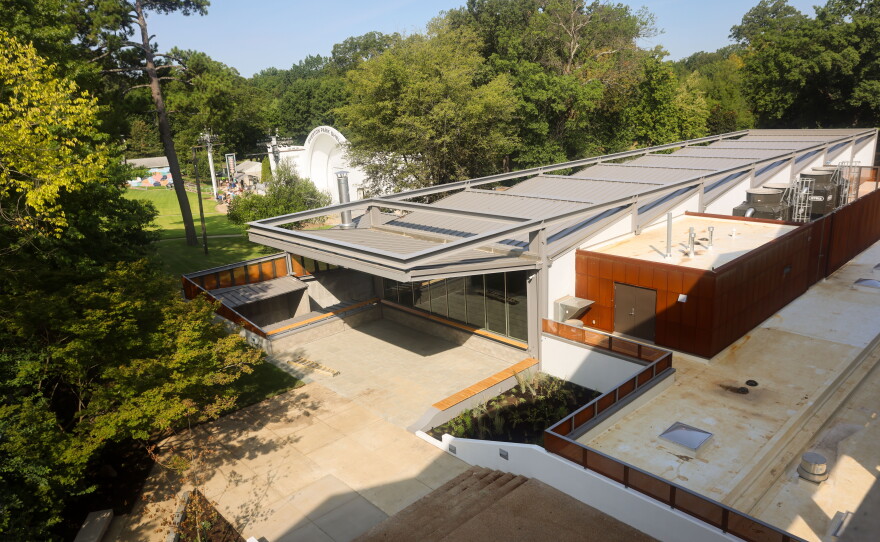
A few years ago, the National Ornamental Metal Museum decided to level up. Since 1979, it occupied a small campus on the Mississippi River. Rebranding as the Metal Museum, it now aims to be an international attraction for both people who appreciate — and make — metal artwork. But this required a major addition to the historic landmark.
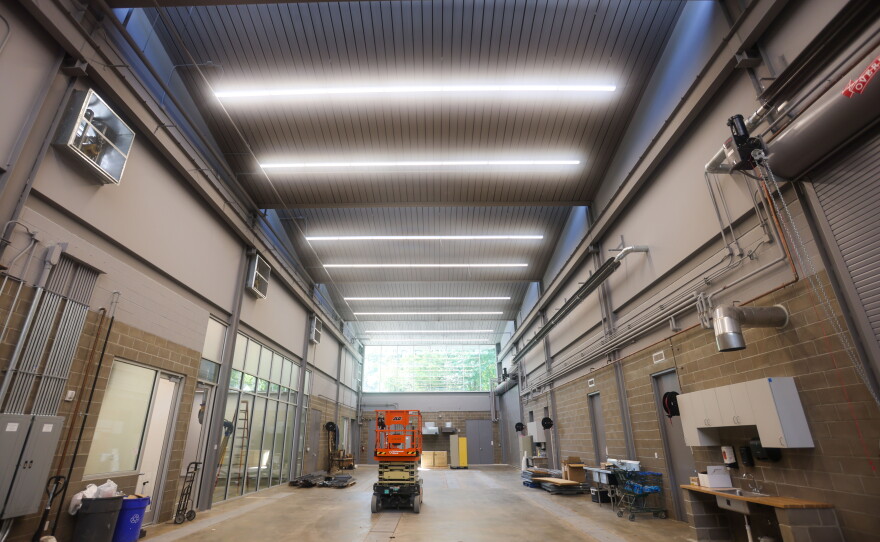
Krissy Flickinger stands in a hangar-sized room counting out multiple, giant garage doors.
"This is where they'll do iron pours, this huge stack right here," she says.
Flickinger explains the legal ground rules for this industrial-size production facility now tucked behind, and below, the old college.
"The main guidelines from the Park Service for any sort of addition to a historic structure is that it doesn't overshadow that original building," she says.
Most importantly, it stays out of Instagram photos. But Flickinger says her favorite architectural element is something most people will never notice.
"This is the special brick here," she says, pointing to a vintage 1959 brick that was never meant to be seen. It was exposed while making a corridor between the old and new buildings.
"But it helps tell the story, so we all really love it," she says. "And when we talk about the space and how the building has evolved with time, that's what this is. These are original foundation walls. Here they are in all their beautiful glory."
A silent, unassuming piece of history that marks the exact spot where past and future meet.
