

Earlier this year, Tennessee lawmakers redrew the state’s congressional districts to take advantage of a simple political fact: that urban and rural communities vote differently.
But ahead of the November Midterms, a host of national issues, from gas prices to inflation, are crossing county lines.
While the new congressional maps have yoked together very different communities, they also invite voters to see what connections can be made between the far corners of the new districts.
Under the Influence
A famous one starts here in the lobby of Memphis’ Peabody Hotel, where cocktails are served with a dash of homespun history.
Each day around noon, visitors can watch a handful of live mallards parade through the lobby.
Keenon Walker, known as the Duckmaster, gently guides them into the hotel’s marble fountain.
"And I know the number one question people that people wonder when they come to the Peabody Hotel is why are there ducks in this fountain," he says.
In 1933, the general manager went hunting in Arkansas with a friend. They took their live duck decoys.
"But they also took a lot of Jack Daniel's Whiskey over there to stay warm," Walker says. "They got a little too warm."
And upon returning Memphis, they set their ducks loose in the fountain. That one-time prank now brings a quarter million people each year to the hotel lobby.
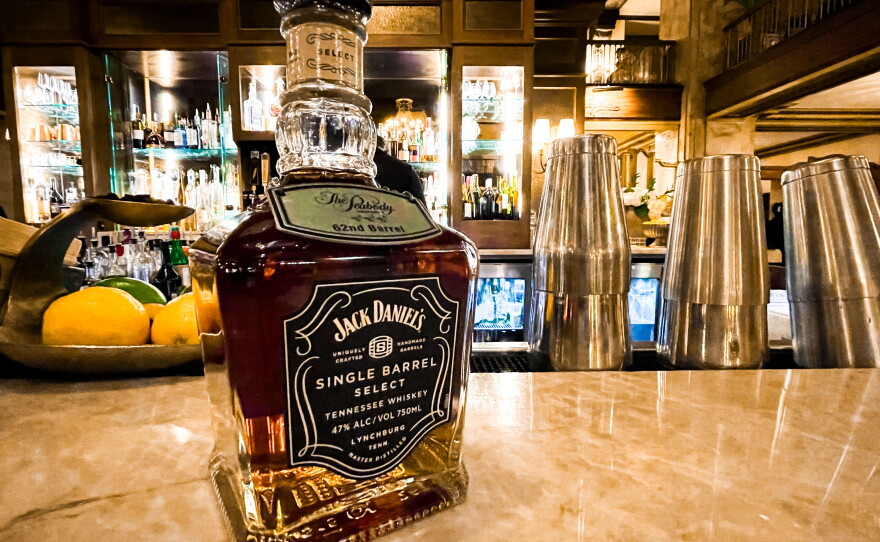
It’s a story that comes with some readymade product placement. And the Peabody has long made Jack Daniel’s whiskey -- made in the small, middle Tennessee town of Lynchburg -- a featured brand at its bar.
But this year, thanks to state lawmakers, a new political connection draws attention to the changing dynamics between town and country.
State Senator John Stevens (R-Huntingdon) says the state's new Congressional maps are pure politics.
"The maps were drawn to maximize our partisan advantage," he said during the special session for redistricting.
Memphis was carved into three pieces so that rural Republicans will likely outnumber urban Democrats at the polls.
On the Whiskey Trail
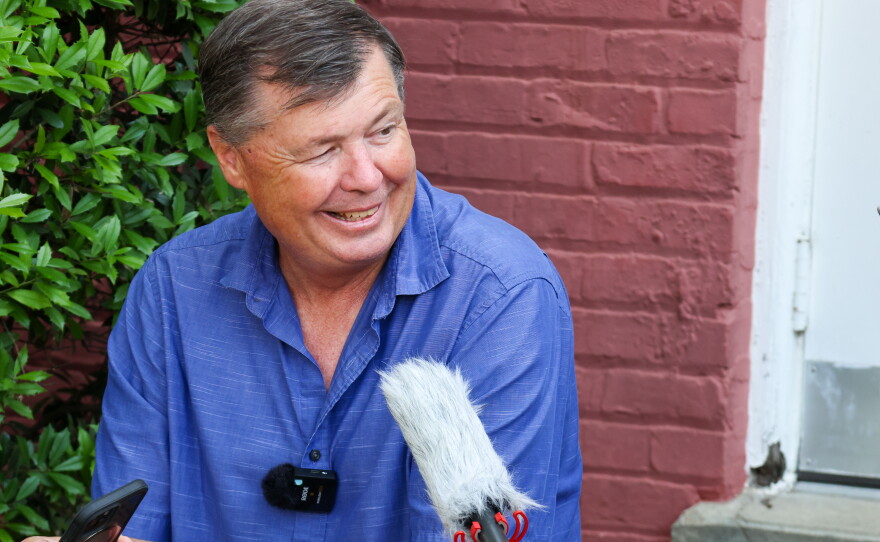
255 miles due east from the Peabody fountain, the Mayor of Moore County, Sloan Stewart, sits on the courthouse steps, just outside his office.
"If they need me, they holler through the hallway," he says.
The governments of Moore County and its seat, the town of Lynchburg, are combined, as there are just 6,500 residents spread across the entire county— the second smallest in the state.
Even he didn’t see much logic in tying Lynchburg to Southwest Memphis. Its residents, many with agricultural jobs, have almost nothing in common with their new constituents back in Orange Mound, a small Memphis neighborhood with more than double Moore County’s population.
"We don’t have the poverty, knock on wood. We don’t have the crime. We don’t have the drug use," he says.
They don’t even have bars. It’s technically a dry county.
Technically, because the whole place runs on Jack Daniel’s.
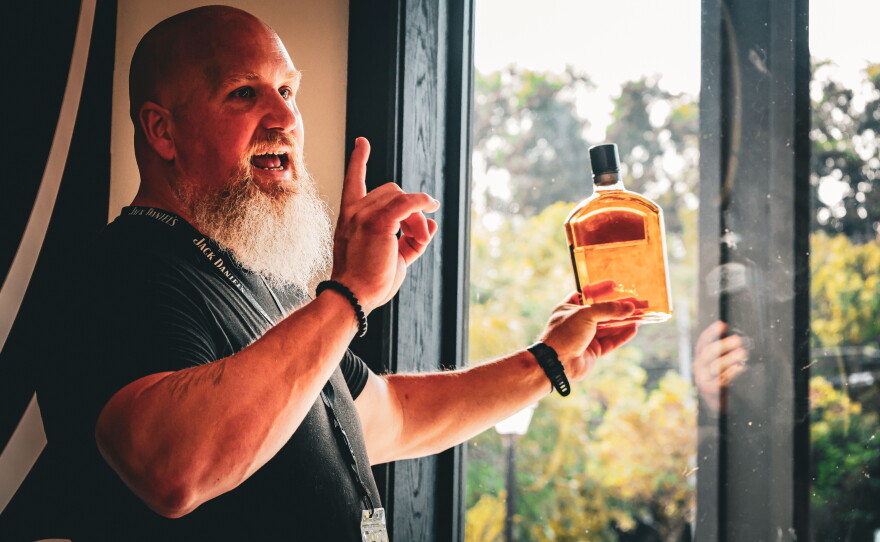
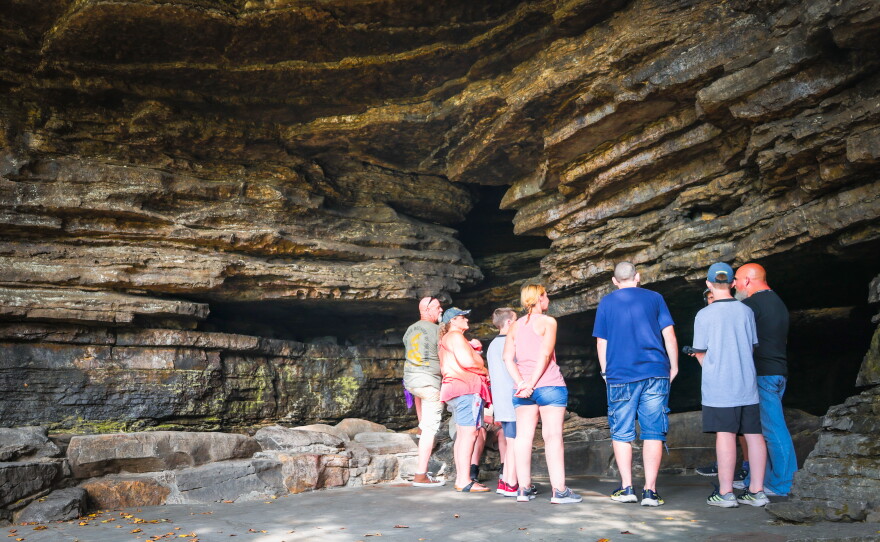
In the heart of Lynchburg, Jed Lirette has brought a group of tourists to the mouth of an underground cave.
"Got a long story for you, but this is the best place for a long story," says the senior brand ambassador for the Jack Daniel's Distillery.
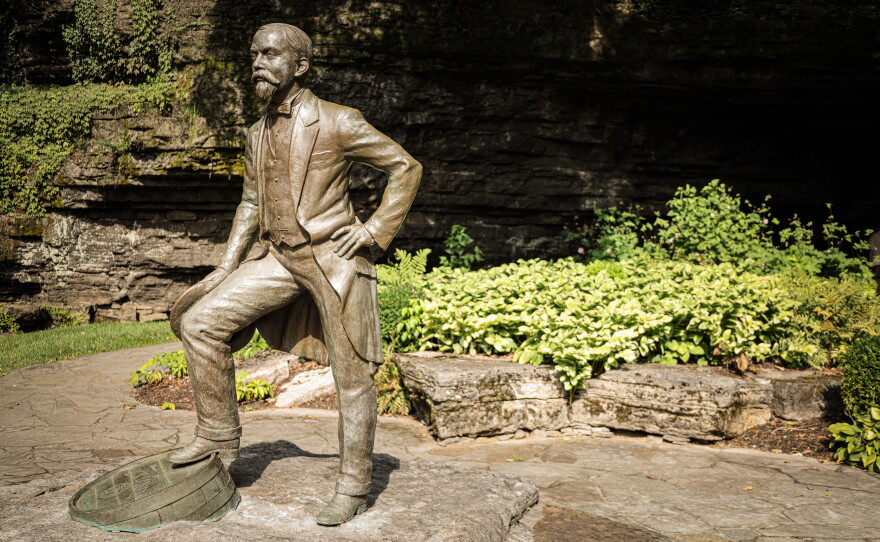
Frigid water flows out of the cave, making this a cool stopping point on the tour. It's also the place where Jack Daniel set up his still and made whiskey on the property.
About 300,000 people visit this spot each year. Lirette emphasizes the role of George Green, the Black man who helped run Daniel’s first still.
The roof of the cave shows their work.
"All the black, the discoloration, that is smoke, soot and ash from Jack and George stoking their fire from 140 years ago," Lirette says.
If urban Memphis and rural Lynchburg could chat over a cocktail, they might agree that race is a feature, not a bug, of Tennessee history.
They might also talk about the role of legacy businesses. For master Distiller Chris Fletcher, America's largest distillery by volume feels more like a family business.
"I’ve spent almost my whole career with Jack Daniel’s," he says. "My mom’s dad, he was a distiller here. This is my grandfather’s old office actually."
Every Jack Daniel's product is made and bottled here, and workers' ties with the company make this a tight-knit community.
"I'd say roughly half of our workforce is related to another employee here now," Fletcher says. "My sister works here, she's an engineer. I have cousins who work here now."
The company’s 600 or so workers may seem tiny compared to the 30,000 at FedEx, Memphis’ largest private employer. But their respective towns rely on the tax revenues they generate.
Roll out the Barrel
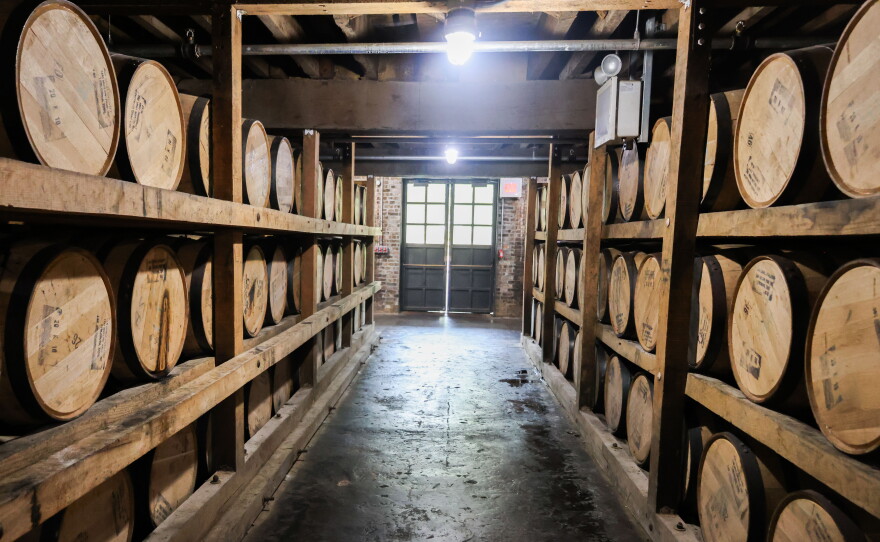
Back in the so-called “living room of Memphis,” these economics meet over drinks. Nearly 20 years ago, the Peabody Hotel bought its first barrel of Jack Daniel’s straight from the distillery.
"At the time we thought, 'Oh my gosh, 245 bottles is what a barrel will yield. We're never going to be able to go through that,'" says Kelly Brock, the Peabody's Director of Marketing and Communications.
Today, Brock says, "we are buying nine to 12 barrels a year and that is all being drank by our guests here at this hotel. So we go through a lot of Jack Daniel's here."
Call it job security for the hotel’s ducks. They paddle the fountain unaware that Memphis tourist spending was down last year. Or that whiskey sales have declined nationwide due to changing consumer habits.
But in November, Memphis and Lynchburg will voice these and other concerns at the ballot box. And hopefully, they’ll have their ducks in a row.
