

For nearly a decade, Jeff Kollath was one of the foremost authorities on Memphis music history. As curator of the Stax Museum of American Soul Music, he lived and breathed the stuff.
And then a few years ago, he got an offer that—for a museum guy—he could not pass up.
"It was time to see if I had it in me to build a museum from scratch," he said.
He wouldn’t have far to travel. A 20-minute drive over the Mississippi River to Marion, Arkansas.
The small town had a compelling story to tell — a story that could serve as both a testimonial and memorial to the worst maritime disaster in United States history.
"The country basically forgot about it," Kollath said. "It was mostly ignored when it happened."
On Saturday, Nov. 14, 2026, the brand new Sultana Disaster Museum opens to the public. After two and half years of construction, the $11 million museum explores the sinking of a ship.
In Ken Burns’ landmark Civil War documentary, the incident gets a passing mention -- a brief postscript to years of brutal American combat.
"At Vicksburg, 2000 liberated Union prisoners crowded onto the decks of the steamboat Sultana, gleeful to be on their way north at last," says the narration."Near Memphis, a boiler exploded and she burst into flames."
The museum turns this postscript into a preface, said Kollath.
"It’s an end-of-the-Civil-War story, but then it starts this whole new story about making people safer," he said.
It’s April 1865, and the Civil War has just ended. Five days later, President Abraham Lincoln was assassinated. In this time of celebration and mourning, the U.S. government was moving thousands of federal troops back home to their families.
Many had just been freed from prisoner of war camps in the South.
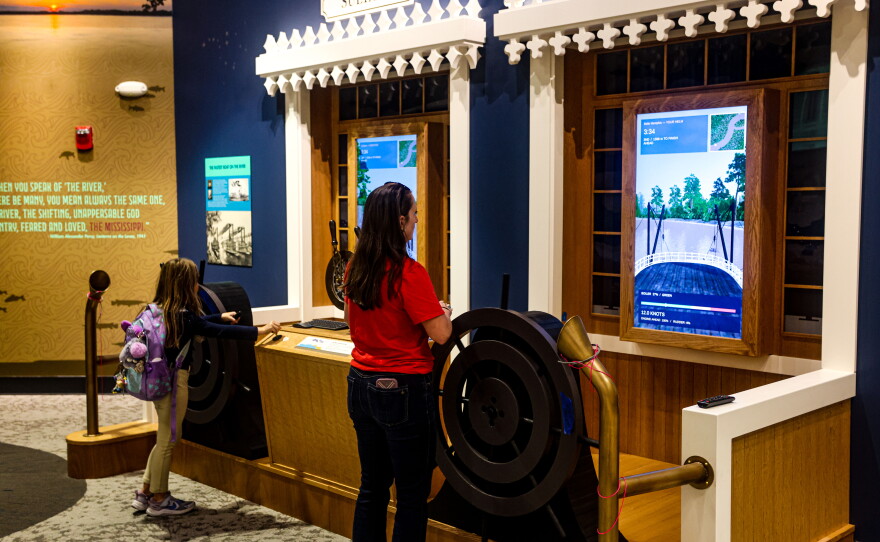
The Sultana was a side-wheel steamboat running passengers and cotton on the lower Mississippi between St. Louis and New Orleans. It had a legal capacity of about 460 people. But the Sultana’s owners saw a chance to make a lot of money.
The last known photo of the Sultana, taken in Helena Arkansas, shows three decks packed with people — a portion of the 2,127 passengers and crew who would end up in the frigid river the very next day.
When the boiler exploded, at 2 a.m., near what is now Marion, the fireball lit up the night. Kollath said residents came running.
"And they heard the cries and the screams for help and folks went into the river," he said.
He says descendants of those rescuers still live in the Midsouth.
"All of these people that lived on this side of the river… and kids remember their dads and older brothers helping and then bringing guys over to their houses and letting them sit by the fire and giving them dry clothes and whiskey," he said.
1,169 people died that night, a number comparable to that other more famous shipwreck — the Titanic.
Marion resident Melody Walker is a retired history teacher.
"I cannot tell you how many times I have heard, 'Okay, I've lived here my whole life and I didn't know anything about this story,'" she said.
For years, Walker has told it at a smaller, storefront version of the museum which opened in in 2015. The new facility occupies a historic high school gymnasium.
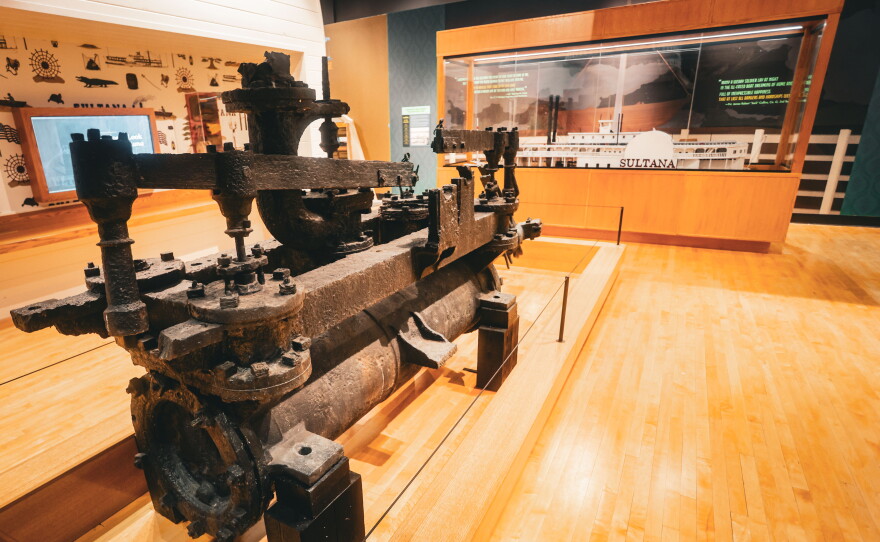
While few artifacts were recovered from the actual wreckage, the museum boasts hundreds of photos, family heirlooms and narratives from the passengers.
For decades after the event, survivors held reunions and worked to keep the memory of the tragedy alive. 161 years later, Kollath says the Sultana Disaster Museum is now a repository for this unique piece of Mid-South history.
"The nature of the human cargo aboard was so hyper-unique to this incident, that's what sets it apart," he said.
The opening ceremony for the new Sultana Disaster Museum is 10 a.m Saturday, Nov. 14, with a ribbon cutting at 11 a.m. in Marion. Admission that day is free. And regular hours start next Tuesday.
